
Haskell County Court Records After a Jail Arrest
The Haskell County arrest-to-court path usually moves through arrest, booking at the detention facility, magistrate warnings and bond, prosecutor review, formal charge filing, clerk case record, court settings, and disposition. The Haskell County District Attorney page names Mike Fouts as District Attorney and lists 940-864-2072. Haskell is part of the 39th Judicial District, and the DA office is tied to the courthouse office cluster at 1 Ave D in Haskell. The sheriff page names Sheriff Conrad Saucedo, III, which is useful when matching court records back to local arrest and custody questions.
The jail side and the court side answer different questions. Jail inmate records help confirm whether someone was booked, where the person is held, and whether a bond or hold appears. Jail roster mugshots concern booking photos and photo-access limits. Court records after a jail arrest show the charges filed by the prosecutor, the court handling the case, hearings, pleadings, dismissals, pleas, convictions, and other case outcomes.
How to Find Court Records After an Arrest in Haskell County
Start with enough identifiers to separate a jail booking from a filed criminal case: full name, date of birth if known, arrest date, arresting agency, and any booking or case number. Then check court channels in order. A fresh booking may not have a filed case yet, and a filed court case may use a charge title different from the initial jail charge.
- Confirm the booking or custody status through the Haskell County Sheriff at 940-864-2345 or Rolling Plains Detention Center at 940-864-6200.
- Ask whether the matter is felony/district, county-level misdemeanor, Justice Court, municipal, federal, or immigration related.
- Search re:SearchTX by party or case information where available.
- Call the District Clerk at 940-864-2030 for district court matters and the County Clerk at 940-864-2451 for county-level records and clerk search/fee questions.
- Contact Justice Court at justicecourt@haskellcountytx.gov or 940-864-2903 for JP matters; the research lists Monday-Friday 1:00 p.m. to 5:00 p.m. hours.
- Use the Texas DPS Conviction Name Search for statewide conviction history, not for live custody or pending jail status.
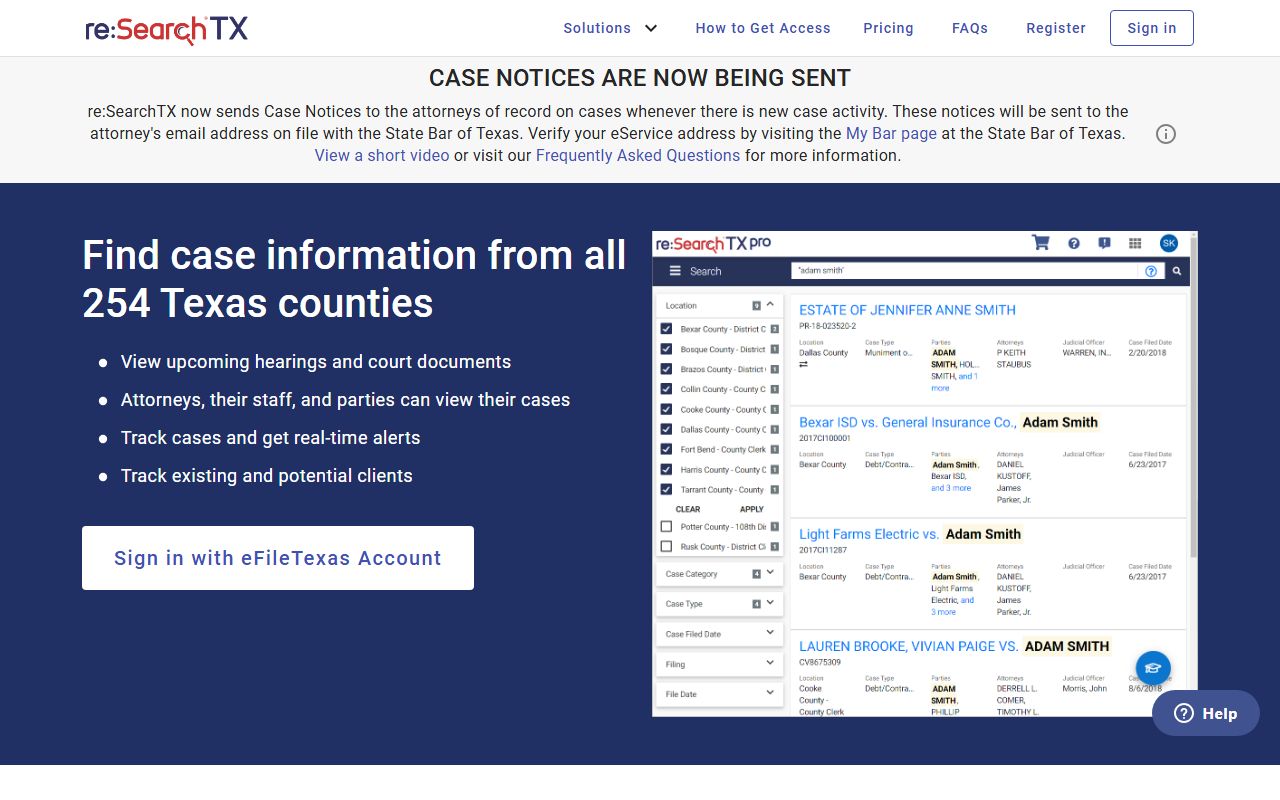
The re:SearchTX portal is the statewide court-record entry point described in the research.
Clerk and Prosecutor Channels for Court Records After Arrest
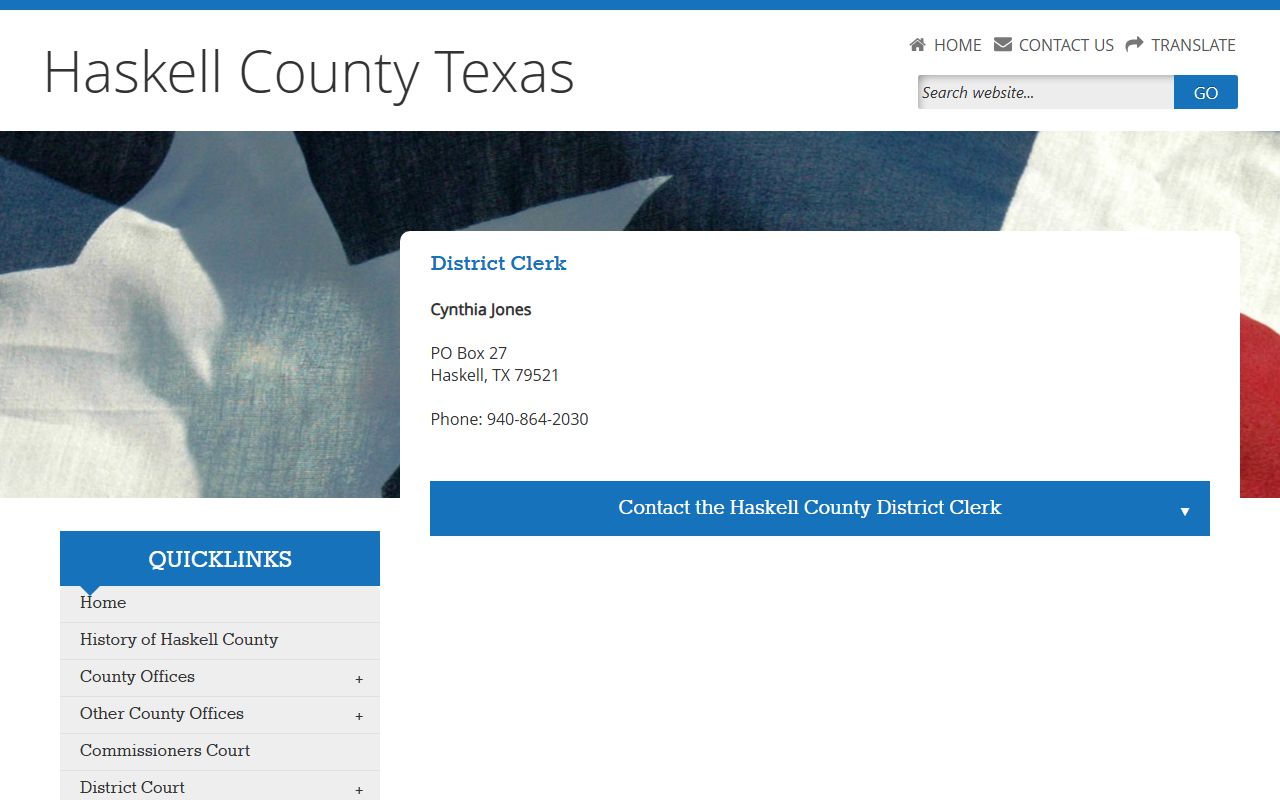
Haskell County's official office pages are sparse but useful because they identify the local people and phone numbers for post-arrest court records. The District Clerk page names Cynthia Jones and lists PO Box 27, Haskell, TX 79521, with 940-864-2030. The County Clerk page names Cindy Walker and lists PO Box 725, 1 Ave D Ste. 4, Haskell, TX 79521, with 940-864-2451 and fax 940-864-6164. Justice Court names Judge Doy Jeter, court clerk Linda Abila, justicecourt@haskellcountytx.gov, and 940-864-2903.
The Haskell County District Clerk page is a direct local source for district court record contact information.
Charging Documents After a Jail Arrest
A booking charge records what law enforcement entered at jail intake. A charging document records what the prosecutor or grand jury brings into court. In Texas, the exact document depends on the offense level and court. Haskell County felony matters generally route through district-level channels, while misdemeanors and lower-level matters may involve county, justice, or municipal court depending on the charge.
| Document | Who Uses or Files It | Common Role After Arrest | Record Channel |
|---|---|---|---|
| Complaint | Officer, prosecutor, or court process depending on case type | Can begin or support a criminal case and probable-cause review. | Relevant clerk or court handling the matter. |
| Information | Prosecutor | Formal prosecutor-filed charge in many non-indictment cases. | County or district clerk depending on jurisdiction. |
| Indictment | Grand jury | Formal felony charging document after grand-jury action. | District Clerk for district court felony records. |
| Judgment or disposition | Court | Shows final outcome such as conviction, acquittal, dismissal, or sentence. | Clerk of the court where the case was resolved. |
Charge Status in Court Records After a Jail Arrest
Charges can change after prosecutor review. A jail entry may list the arrest charge, while court records may show an amended, reduced, enhanced, added, or dismissed charge. Use the filed complaint, information, indictment, docket, and judgment as the formal court record, then compare back to the jail booking only for custody context.
| Status | What It Means | Practical Reading Tip |
|---|---|---|
| Pending | The charge or case is open and unresolved. | Look for next court date, bond conditions, and whether other counts exist. |
| Filed | The prosecutor or court has entered a formal charge. | Do not rely only on the arrest charge once a filing exists. |
| Amended or reduced | The charge changed from the original version. | Compare the most recent docket entry and final judgment. |
| Dismissed | The court or prosecutor ended that count or case without conviction on that charge. | A dismissal is not the same as automatic expunction. |
| Conviction | The case ended in a guilty finding, plea, or accepted judgment. | Use the judgment and DPS conviction records for statewide conviction-history context. |
| Deferred adjudication | A Texas case outcome that may avoid a final conviction for some purposes if conditions are completed. | Eligibility and public visibility depend on the statute, order, and record type. |
Bond and Release Records After an Arrest
Texas Code of Criminal Procedure Chapter 17 governs bail and personal bond concepts. Haskell County did not publish a jail bond page, payment schedule, online bond portal, or after-hours bond desk procedure in the sources reviewed. The safe local workflow is to confirm custody, ask whether bond has been set, identify the court or magistrate that set it, and ask whether a hold remains even after bond is posted.
| Bond Type | How It Works | Haskell Research Note |
|---|---|---|
| Cash bond | Full cash amount is posted with the proper court or jail authority. | Local payment forms and hours were not published. |
| Surety bond | A licensed bail bond company posts bond for a fee. | Commercial bail remains legal in Texas. |
| Personal or PR bond | Release on written promise and court-imposed conditions. | Availability depends on the magistrate or court. |
| Property bond | Property is pledged where allowed. | No Haskell-specific instructions were located. |
| No-bond hold | Release is not available through ordinary bond posting. | Ask about parole, warrant, federal, ICE, or out-of-county holds. |
Warrants That Create Court Records After an Arrest
No official Haskell County active-warrant search page, sheriff warrant list, or public bench-warrant database was located. Warrant questions should go to the sheriff at 940-864-2345, the issuing court, or counsel when an arrest risk exists. Justice Court matters can be routed to 940-864-2903, and district matters can be routed to the District Clerk at 940-864-2030.
An arrest warrant authorizes arrest on probable cause or a filed charge. A bench warrant or capias often follows failure to appear or noncompliance with a court order. A fugitive or out-of-county warrant may produce a Haskell booking or hold. A parole or blue warrant can prevent release. Search warrants are different because they authorize a search, not a jail lookup.
Charges vs. Convictions in Haskell County Court Records
An arrest, charge, and conviction are separate legal events. Court records after a jail arrest may show only an accusation at first. A conviction appears only after a guilty plea, verdict, or accepted judgment. For statewide conviction history, use Texas DPS, but remember that DPS conviction search is not a live jail roster and does not show current custody.
| Point of Comparison | Charge | Conviction |
|---|---|---|
| Stage | Accusation filed or carried forward after arrest. | Final adjudication through plea, verdict, or judgment. |
| Proof level | Starts from probable cause and prosecutor review. | Requires proof beyond a reasonable doubt or accepted plea. |
| Record source | Complaint, information, indictment, docket, or pending case record. | Judgment, sentence, and conviction-history records. |
| Custody meaning | May affect bond, holds, and court dates. | May affect sentence, probation, prison transfer, or criminal-history reporting. |
Sealed vs. Expunged Arrest and Court Records
Texas Code of Criminal Procedure Chapter 55 governs expunction of qualifying criminal records. Texas also has non-disclosure concepts for some records, often described as sealing from ordinary public access. Eligibility is fact-specific and depends on the charge, outcome, waiting period, prior history, and court order. A dismissed case, no-bill, acquittal, or completed deferred outcome does not automatically erase every record.
| Point of Comparison | Sealed or Non-disclosed | Expunged |
|---|---|---|
| Public visibility | Generally restricted from ordinary public access. | Removed, destroyed, or treated by law as not existing for many purposes. |
| Government access | Certain agencies or uses may still have limited access. | Access is much more limited and depends on the order and statute. |
| Typical route | Petition or order for non-disclosure where eligible. | Petition and court order under Chapter 55 where eligible. |
| Effect on jail and mugshot records | May restrict public display but does not necessarily destroy all internal records. | Can require agencies to remove or return qualifying records covered by the order. |
Public Access Laws for Court Records After Arrest
Texas Government Code Chapter 552 is the baseline public-information law for Texas governmental bodies, subject to exceptions. Section 552.108 is often relevant to active law-enforcement matters. Texas Code of Criminal Procedure Chapter 15 covers arrest warrants and related arrest procedures, while Chapter 17 covers bail and bond. Juvenile matters and sealed or expunged records may be restricted.
Important: A public case lookup is not an FCRA consumer report and should not be used for employment, housing, credit, insurance, or similar screening decisions.
DPS Conviction Search and Background Check Limits
The Texas DPS Crime Records Division and the paid DPS Conviction Name Search provide statewide conviction-history access. That channel is useful after a case has resulted in a reportable conviction, but it is not a jail roster, not a bond desk, and not a full docket viewer. Pending charges, dismissed counts, sealed matters, expunged matters, and documents available only from a clerk may not appear the same way in a DPS conviction search.
Restricted Court Records After a Haskell County Arrest
Some court and arrest records are not available through ordinary public search. Limits may apply to juvenile records, sealed cases, expunged records, victim information, confidential identifiers, active investigations, security-sensitive jail information, and records covered by a specific court order. When an online portal does not show a record, the next step is not to assume no case exists. Confirm the spelling, date, court level, and jurisdiction, then contact the clerk or court that would hold the file.